
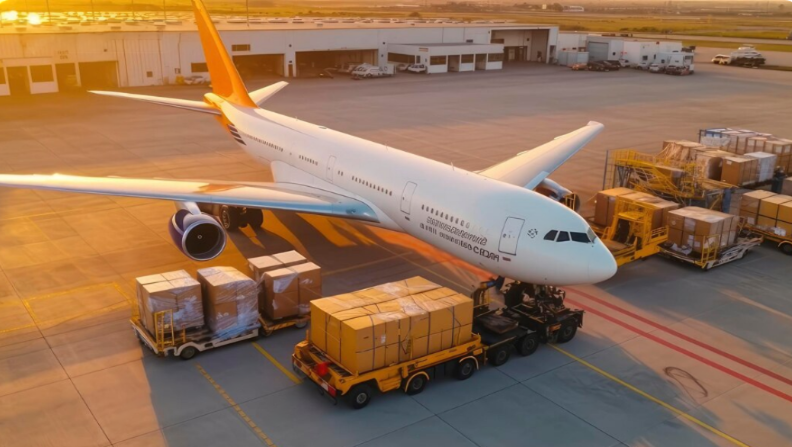
When a shipment needs to move across borders quickly, importers and exporters often have to choose between scheduled air cargo and a dedicated aircraft. Understanding the difference between international air freight shipping and air charter services can help businesses select the right transportation option based on urgency, shipment size, destination, and operational requirements.
Both solutions can provide faster transit than many ocean or ground freight options, but they serve different logistics needs. International air freight typically uses established airline networks and scheduled cargo capacity, while an air charter can provide a dedicated aircraft for shipments that require greater control over timing, routing, or capacity.
What Is International Air Freight Shipping?
International air freight shipping involves transporting commercial cargo between countries through scheduled airline or cargo carrier networks. Freight is booked according to available routes and flight schedules, with shipments typically consolidated with cargo from other businesses.
This option is commonly used for products, components, documents, equipment, and other goods that need faster international transportation without requiring an entire aircraft.
For import/export businesses, international air freight can provide access to established global routes and regular departure schedules. It can also offer predictable transit times when shipments move between well-connected international airports.
The exact transit time depends on factors such as origin, destination, flight availability, customs clearance, handling requirements, and connections.
What Is Air Charter Freight?
Air charter freight involves arranging a dedicated aircraft for transporting cargo. Instead of relying entirely on scheduled airline capacity, a business can charter an aircraft based on its specific shipment requirements.
Charter services can be particularly useful when cargo is extremely urgent, unusually large, difficult to route through regular networks, or required at a destination that does not have convenient scheduled service.
Because the aircraft is dedicated to the shipment or a specific group of shipments, businesses may have greater flexibility over departure timing and routing.
Businesses can learn more about air charter options when a shipment requires dedicated transportation capacity.
However, that additional flexibility generally comes with higher costs than standard air freight services.
International Air Freight vs Air Charter: Key Differences
The biggest difference between these two transportation methods is how the aircraft capacity and schedule are arranged.
1. Scheduling and Departure Times
International air freight operates according to existing airline schedules. Businesses select available flights and cargo services that fit their shipment requirements.
This can work well when a shipment has a defined delivery deadline but does not require an aircraft to depart at a specific time.
Air charter freight provides more scheduling flexibility because the aircraft can be arranged around the shipment’s requirements. This can be valuable when waiting for the next scheduled flight could create significant operational problems.
2. Transit Times
Both options can provide fast international transportation, but their actual transit times can differ depending on the route.
Scheduled international air freight may involve connections, airport handling, and carrier schedules. A direct or well-connected route can provide efficient transit, while less frequent routes may require additional planning.
Air charters can sometimes reduce delays associated with connecting flights because the aircraft can be arranged around the shipment’s routing requirements.
However, charter does not automatically mean that every shipment will arrive faster. Customs, ground handling, airport availability, permits, weather, and other operational factors can still affect the overall timeline.
3. Shipment Size and Capacity
Standard air freight is suitable for a wide range of shipment sizes and weights. Businesses can book the amount of cargo capacity they need rather than paying for an entire aircraft.
Air charter becomes more relevant when a shipment requires substantial capacity or has dimensions that make standard cargo arrangements difficult.
For example, large industrial equipment, specialized machinery, emergency components, and project cargo may require transportation planning that goes beyond a typical scheduled cargo booking.
4. Routing Flexibility
Scheduled air freight follows established airline networks. This makes it practical for common international trade lanes where frequent flights are available.
Charter operations can provide greater routing flexibility. Depending on aircraft availability, airport restrictions, and regulatory requirements, a charter may be arranged to serve a location that is difficult to reach through conventional scheduled services.
This flexibility can be especially useful for businesses moving cargo to remote or less frequently served markets.
Businesses can also compare charter options with commercial air freight when evaluating routing and capacity requirements.
5. Cost
Cost is one of the most important differences between international air freight and air charter.
With scheduled air freight, businesses generally pay for the cargo capacity they use. This makes it practical when speed is important but a dedicated aircraft is not necessary.
An air charter involves arranging an aircraft specifically for the shipment. The total cost can therefore be significantly higher, depending on the aircraft, route, fuel requirements, airport fees, crew, permits, positioning, and operational complexity.
For this reason, businesses should evaluate the cost of transportation against the potential cost of delaying the shipment.
When Should You Choose International Air Freight?
International air freight shipping is often the practical choice when your business needs speed but does not require a dedicated aircraft.
It can be a suitable option when:
- Your shipment fits within standard airline cargo requirements.
- Your destination has regular scheduled air service.
- Your delivery deadline allows for an existing flight schedule.
- You want faster transportation without charter-level costs.
- Your shipment does not require specialized routing.
- You can work with standard airport handling and customs procedures.
For many importers and exporters, scheduled air freight provides a balance between transportation speed, network availability, and cost.
When Should You Consider Air Charter Freight?
Air charter freight may be appropriate when the shipment has requirements that standard air cargo cannot easily accommodate.
A charter can be considered when:
- The shipment is extremely time-sensitive.
- A production shutdown or major operational disruption could result from delay.
- The cargo requires significant aircraft capacity.
- The destination has limited scheduled cargo options.
- The shipment requires greater control over departure timing.
- The cargo has unusual dimensions or handling requirements.
- A specific routing solution is needed.
Charter services are particularly relevant for emergency logistics, critical industrial components, disaster response cargo, and other shipments where transportation flexibility has significant operational value.
How Urgent Is Your Shipment?
Urgency should be one of the first factors businesses evaluate.
Not every urgent shipment requires a charter aircraft. A scheduled air freight service may still provide the required delivery window if a suitable flight is available.
For example, an importer may need replacement inventory quickly to prevent a stock shortage. If several scheduled flights are available between the origin and destination, international air freight may provide the necessary speed without the additional expense of chartering an aircraft.
A different situation occurs when a critical component must reach a facility immediately and the next suitable scheduled flight is too late. If the resulting delay could stop production or create significant business losses, an air charter may become a more practical option.
The key question is not simply, “Which option is faster?” It is, “What transportation solution meets the required delivery deadline while making sense for the business?”
Consider the Total Cost of Delay
Transportation price should not be the only factor in the decision.
A lower freight cost can become expensive if a delayed shipment causes production downtime, missed customer commitments, inventory shortages, contract issues, or other operational disruptions.
For example, an international manufacturer waiting for a critical machine component may face significant costs if production has to stop. In that situation, paying more for faster transportation could potentially reduce the financial impact of the delay.
On the other hand, if a shipment can comfortably wait for the next scheduled flight, paying for a dedicated aircraft may provide little additional business value.
This is why import/export businesses should compare the freight cost with the potential cost of waiting.
Shipment Characteristics Matter
The nature of the cargo also influences the right transportation method.
Standard commercial products and regularly shipped inventory can often move efficiently through scheduled air freight networks.
More specialized cargo may require additional planning. Heavy machinery, oversized components, high-value equipment, time-critical parts, and project cargo can have requirements related to aircraft capacity, handling, loading, security, or routing.
Before selecting a service, businesses should provide accurate information about the cargo’s dimensions, weight, packaging, commodity type, pickup location, destination, and required delivery date.
This information allows the logistics provider to determine which transportation solution is realistically suitable.
Destination and Route Availability
The origin and destination of the shipment can significantly influence the decision.
Major international trade lanes may have frequent scheduled flights, making standard air freight a convenient option.
Less common routes may have limited capacity or require multiple connections. When a shipment has a strict deadline, these additional transportation stages can introduce more scheduling dependencies.
An air charter can provide an alternative when scheduled options do not align with the shipment’s requirements, although feasibility depends on aircraft availability, airport capabilities, permissions, and other operational factors.
Air Freight Services for Importers and Exporters
Import/export businesses often manage multiple shipment types at the same time. One shipment may be routine inventory, while another may be a critical replacement part that cannot wait.
This means businesses do not necessarily need to choose one transportation method for every shipment.
Scheduled international air freight can support regular international cargo movements, while charter services can be reserved for exceptional situations where greater flexibility or dedicated capacity is necessary.
Having access to both options can help businesses build a more adaptable international logistics strategy.
Businesses can also review shipping in Canada for additional information about international air freight requirements.
A Simple Decision Framework
When deciding between international air freight shipping and an air charter, consider these questions:
- How quickly must the shipment arrive?
If the required delivery date can be met through scheduled flights, standard air freight may be sufficient. If available schedules cannot meet the deadline, charter may need to be evaluated.
- How large or specialized is the cargo?
Standard cargo can often move through regular airline networks. Oversized, unusually shaped, or highly specialized shipments may require a different solution.
- How flexible is the destination?
Well-served international airports may provide plenty of scheduled options. More challenging destinations can require additional routing analysis.
- What happens if the shipment is delayed?
Consider production downtime, lost sales, customer commitments, inventory shortages, and other operational consequences.
- What is the transportation budget?
Air charter generally requires a larger transportation investment, so its additional flexibility should be justified by the shipment’s requirements.
- Does the shipment require dedicated capacity?
If the cargo cannot reasonably move through standard airline capacity, a charter may provide an alternative.
Can You Combine Air Freight and Charter Solutions?
Businesses do not always have to treat scheduled air freight and charter services as completely separate strategies.
A company may use standard international air freight for regular inventory and scheduled shipments while relying on charter services for exceptional, time-critical situations.
This approach can help businesses maintain predictable logistics costs while having a contingency option available when a shipment cannot wait for the next scheduled service.
The appropriate combination depends on the company’s supply chain, shipping frequency, destinations, cargo types, and risk tolerance.
How Sprinter Air Can Help With Time-Critical Shipments
Choosing between scheduled international air freight and an air charter requires more than comparing basic transit times. Businesses need to consider cargo characteristics, route availability, deadlines, handling requirements, and the operational impact of delays.
Sprinter Air can help businesses evaluate air freight solutions based on their shipment requirements and international logistics needs. Whether a shipment can move through scheduled air freight or requires a more specialized transportation approach, having the right information upfront can make the planning process more efficient.
For importers and exporters, the goal is to select a transportation solution that meets the required timeline without paying for capabilities the shipment does not need.
Conclusion
International air freight and air charter services can both support time-sensitive international shipments, but they are designed around different transportation requirements. Scheduled air freight can provide access to established routes and shared cargo capacity, while air charter can offer greater control over timing, routing, and dedicated aircraft capacity.
The appropriate option depends on factors such as delivery deadlines, shipment size, cargo characteristics, destination, route availability, budget, and the potential consequences of delay.
For businesses managing international shipments, understanding these differences can help make transportation planning more efficient. Sprinter Air can help businesses evaluate available air freight and charter solutions based on their specific shipment requirements. If you need help planning your next international shipment, contact Sprinter Air.
Frequently Asked Questions
1. What is the difference between international air freight and air charter?
International air freight typically uses scheduled airline or cargo services and shared aircraft capacity. Air charter involves arranging a dedicated aircraft for a specific shipment or transportation requirement, providing greater flexibility but generally at a higher cost.
2. Is air charter faster than international air freight?
Air charter can provide faster or more flexible transportation in situations where scheduled flights do not meet the required deadline. However, actual transit times depend on routing, aircraft availability, customs, airport operations, and other logistics factors.
3. When should a business use air charter freight?
Businesses may consider air charter when cargo is extremely time-sensitive, requires significant capacity, needs specialized routing, or cannot be accommodated efficiently through scheduled air freight services.
4. Is international air freight cheaper than air charter?
International air freight is generally more economical because businesses book cargo capacity within scheduled services rather than arranging an entire dedicated aircraft. The actual cost depends on shipment weight, dimensions, route, service requirements, and other factors.
5. How do I choose between international air freight and air charter?
Start by evaluating the delivery deadline, shipment size, destination, route availability, cargo requirements, budget, and potential cost of delay. If scheduled air freight can meet the business requirement, it may be suitable. If the shipment requires dedicated capacity or greater scheduling flexibility, an air charter may need to be considered.
